Pourquoi nous clôturons la capsule, chaque saison
A manifesto from The Vespre — Maison de Saison.
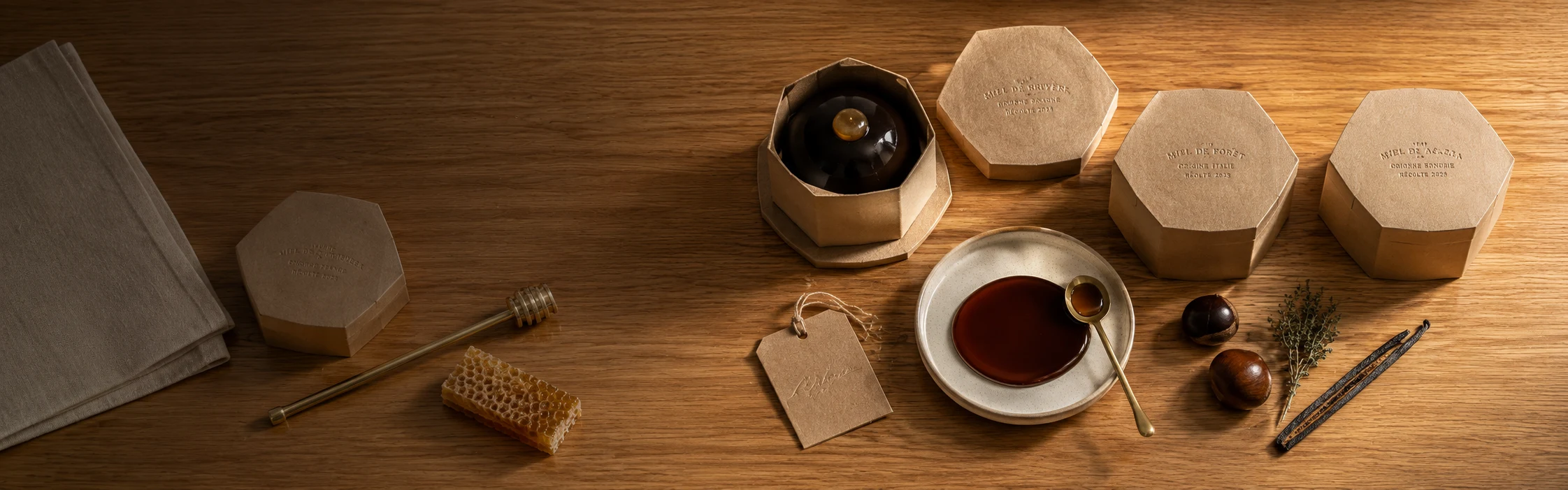
The question asked most often of the Maison's working method is this: why not keep the pieces that are loved? If Miel Noir is admired in Le Rucher, why is it not made again the following autumn?
The honest answer is that to make it again would be to make it differently.
What closure makes possible
A capsule is a body of work composed for a single season — seven pieces, one ruling ingredient, one composition per piece. The chef has six to ten weeks to bring the capsule from the atelier to the vitrine. After that, the season closes.
This is not a marketing device. It is the only structure under which the work the Maison wishes to make is, in fact, makeable.
Inside the closed season, the chef can:
— finish every piece by hand — work with a named apiarist, a named milling, a named farm — refuse to compromise on what is scarce — take the slow methods: infusions over days, doughs left to rest overnight, glazes built in patient layers — decline to scale
Were the same piece kept on a permanent menu, the same chef would have to:
— hold supply year-round, which means larger and less specific suppliers — exchange the slow methods for faster ones, because demand is continuous — hand the finishing to other hands, because one chef cannot finish every piece a week brings — scale
These are not two versions of the same craft. They are two different crafts.
The drift that does not happen here
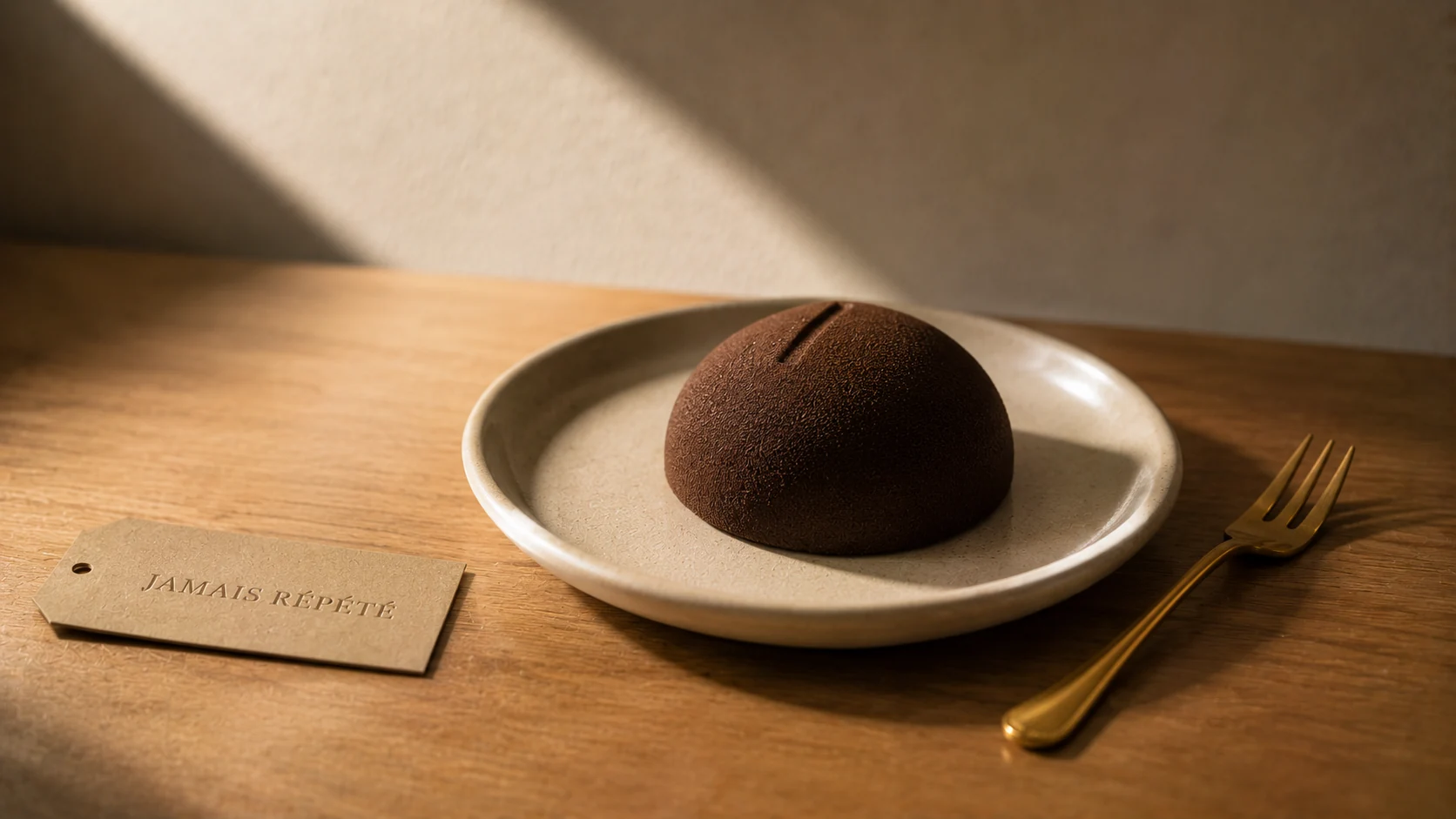
The cost of a permanent menu is small at first. Miel Noir, kept past its season, would taste itself the first few times. Then the apiarist's stock would thin, and a substitute would be sourced. The substitute would prove uneven, and a wholesale supply would take its place. The single-origin chocolate that carries the dome would no longer be available in quantity, and a more constant chocolate would replace it. The dome itself would be assembled by other hands, because the chef cannot build them all.
No single change is dramatic. Each is reasonable. Each one answers the gravity of running a permanent menu. The cumulative effect, over two or three years, is that the Miel Noir on the menu is no longer the Miel Noir of Le Rucher. It is something else, travelling under the same name.
The Maison closes the capsule because we have seen, elsewhere, what would otherwise come to pass.
The archive
When a season closes, the work is returned to what the Maison calls the archive — a private record of what was made, in what form, by which hands, over which weeks.
The archive is not a vault to be reopened. It is a record of what was complete.
Inside it: the recipes as they were finalised, the suppliers as they were that season, the production logs and the labels, the photographs taken at the bench, the notes on what worked and what did not.
The archive is for the chef. It is how the practice learns. It is not for re-release.
A guest who receives a box from Le Rucher receives one of seven creations made for that capsule, in that season, by those hands. There will be no second printing.
What this asks of us
Closure is not a free choice. The Maison accepts its costs.
We forgo the ritual dish — the cake ordered every birthday, the box returned to each fall. A guest who loved Miel Noir cannot order it again next autumn. That is a real loss, and we know it.
We forgo the steady gravity of a flagship. The Maison has no single piece to carry across years. Each season, the work that fronts the House is work no one has yet heard of.
We forgo the quiet economy of repetition. Every capsule's recipes, suppliers, packaging, and schedule are rebuilt from a different centre.
What we receive in exchange is the only thing we know we can keep: authorship. The work the Maison releases is the work the Maison made — in the season it was made for, by the hand that finished it. When the season closes, the work is complete. We do not have to choose between making it again and making it well, because we never have to make it again.
The chef's argument
There is one further reason, and it is the most personal. The chef grows.
A composition Lana Sanders finished in September 2026 is a composition she has already learned from. The hand she would bring to it in September 2027 would not be the same hand. The form would shift. The honey would change. The dome's proportion would alter. The texture would deepen. The piece would no longer be the original — and if she did not allow herself to grow, the piece would not be allowed to either.
A capsule is the photograph of the chef at one season. The next capsule is the photograph of the chef at the next. The body of work that builds, across years, is not a catalogue of pieces returned to. It is a record of a practice changing in real time.
That record is what we mean when we say maison.
More from the journal — read on.